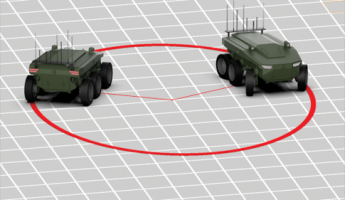
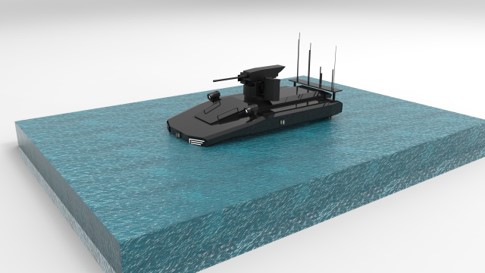
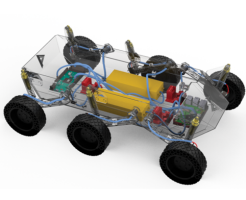
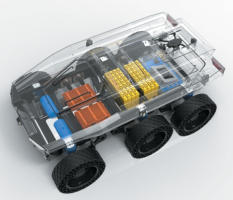
A new product development process begins with the accurate definition of requirements. A robust concept design reduces risks in subsequent design, manufacturing, and validation phases while accelerating decision-making. P-Dynamics conducts concept design activities using a systematic approach, supported by extensive experience in greenfield project development.
During the concept design phase, mission definition, operational needs, and technical constraints are evaluated together to develop scalable solutions at system and subsystem levels.
Concept Design Scope
Definition of system and subsystem requirements
Functional architecture and system layout
Platform- and mission-based concept alternatives
Modularity and variant development studies
Early-stage sizing and feasibility assessments
Mechanical Design
Mechanical design is a fundamental engineering discipline that directly determines a product’s performance, reliability, and manufacturability. P-Dynamics approaches mechanical design at system and subsystem levels, delivering integrated and scalable solutions aligned with defined requirements.
Our design process covers the holistic evaluation of mechanical subsystems such as load-bearing structures, moving mechanisms, mounting structures, and protective housings. Design decisions are made by considering platform architecture, ease of maintenance, and field operating conditions.
The P-Dynamics mechanical design approach prioritizes modularity, manufacturability(DFM/DFA), serviceability, and life-cycle cost criteria. This enables the development of mechanical platforms adaptable to different mission profiles and configurations.
Mechanical Design Scope
System- and subsystem-level mechanical architecture
3D CAD part and assembly designs
Modular and scalable mechanical platforms
Design for manufacturing and assembly (DFM/DFA)
Technical drawings and production documentation
Designs compatible with mechanical–electrical–software integration
Structural Analysis
Structural analysis is a critical step in verifying and optimizing mechanical designs. P-Dynamics treats structural analysis not merely as a strength verification activity, but as an engineering tool that actively guides the design process.
For different mission profiles and operational conditions, analyses are conducted based on defined static, dynamic, and combined load scenarios. This approach enables balanced solutions between structural strength requirements and weight and cost targets.
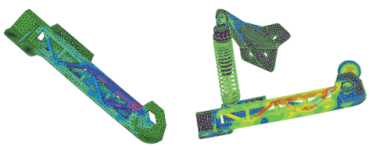
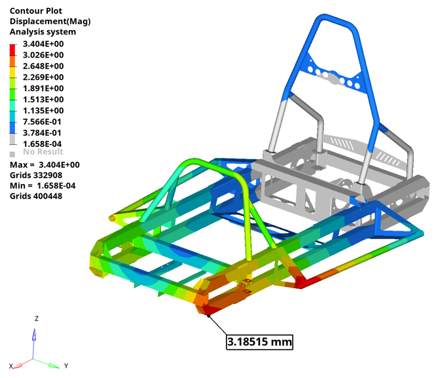
Using Finite Element Analysis (FEA) methods, critical regions are identified and improved during early design stages. This reduces the need for physical prototypes, shortens development time, and allows entry into field testing with more mature designs.
Structural Analysis Scope
Static and quasi-static load analyses
Dynamic load and acceleration scenarios
Stress, displacement, and safety factor evaluations
Weight and geometry optimization
Pre-test structural verification
Modelling & Simulation
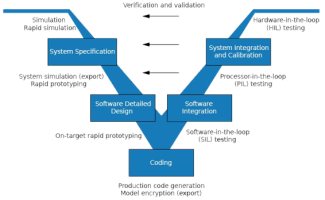
Modeling and simulation are fundamental engineering tools that reduce risk and accelerate decision-making in the development of complex systems. P-Dynamics establishes an end-to-end simulation infrastructure using a model-based design (MBD) approach, covering the process from concept development to validation.
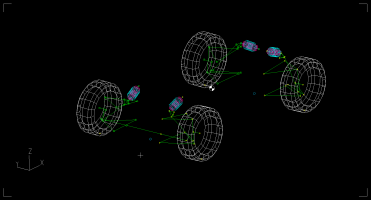
Developed system models encompass mechanical, dynamic, and control subsystems. This enables low-cost evaluation of different mission scenarios, environmental conditions, and usage profiles before physical prototype manufacturing.
Simulation activities are not limited to theoretical analyses; they are conducted using models validated through field tests and experimental data. This approach supports early identification of critical parameters and reliable prediction of system performance.
Modeling and Simulation Scope
Dynamic modeling at system and subsystem levels
Mission- and usage-scenario-based simulations
Validation of control algorithms in simulation environments
Parametric studies and sensitivity analyses
Model validation using test data (model correlation)
Controls & Software
Control systems and software form the core layer that enables mechanical and electronic subsystems to operate together. P-Dynamics develops control algorithms and software solutions based on system integrity and real-time operation principles.
Developed control structures are tested and refined on simulation-validated system models. This ensures that algorithm performance, stability, and boundary conditions are evaluated before deployment to physical systems.
P-Dynamics develops control and software architectures for semi-autonomous and autonomous systems, covering state estimation, motion control, and decision-making layers. Software solutions are configured in accordance with the target platform’s hardware and mission requirements.
Control Systems and Software Scope
Control design at system and subsystem levels
State estimation and sensor fusion frameworks
Real-time control algorithms
Validation and tuning in simulation environments
Software architectures aligned with hardware and mission requirements
Vehicle Dynamics
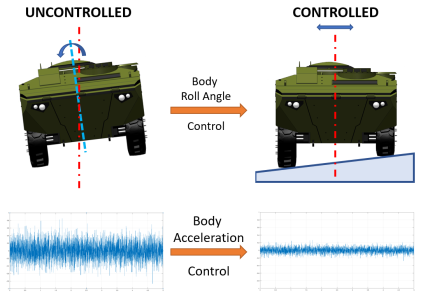
Vehicle dynamics is the engineering discipline that defines a vehicle’s behavior in response to environmental influences and driving inputs. P-Dynamics considers vehicle dynamics not merely as an analyzed output, but as a fundamental system input that feeds control and autonomous functions.
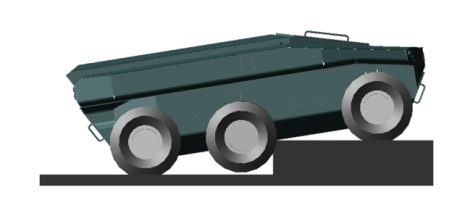
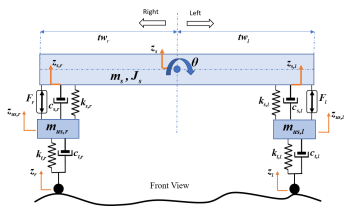
Activities include the combined modeling of lateral, longitudinal, and verticaldynamics. For multi-axle, high-mass, or mission-oriented ground vehicles in particular, vehicle dynamic responses are analyzed under varying speed, load, and terrain conditions.
Developed vehicle dynamics models are validated in simulation environments and utilized in the development of control algorithms and driving strategies. This approach enables early-stage prediction of vehicle stability, maneuverability, and safety performance.
Vehicle Dynamics Scope
Lateral, longitudinal, and vertical dynamic modeling
Dynamic analysis for multi-axle and special-purpose vehicles
Maneuvering and stability scenarios
Integration of dynamic models into control systems